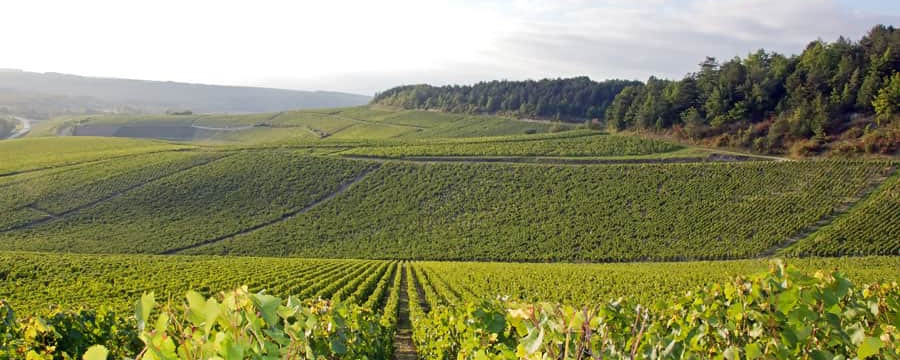
There is a certain generosity to this part of Burgundy. It gives you vineyards that roll toward the horizon, villages that seem to have been arranged by someone with an eye for composition, and a pace of life that makes you wonder why you ever hurried. Chablis sits at the heart of it all, a small town with an outsized reputation, where the wine is extraordinary and the landscape even more so.
Here is how we would spend your days, if we were planning them for a friend.
Wine tasting in Chablis
Chablis and Chardonnay are, of course, inseparable. The town itself is remarkably walkable, and you can move from cellar to cellar at whatever rhythm suits you, unhurried, glass in hand, learning the difference between a Petit Chablis and a Grand Cru not from a textbook but from the winemakers themselves.
A few domaines we return to again and again:
You can find more recommendations and opening hours on our wineries page.
Cycling and walking through the vineyards
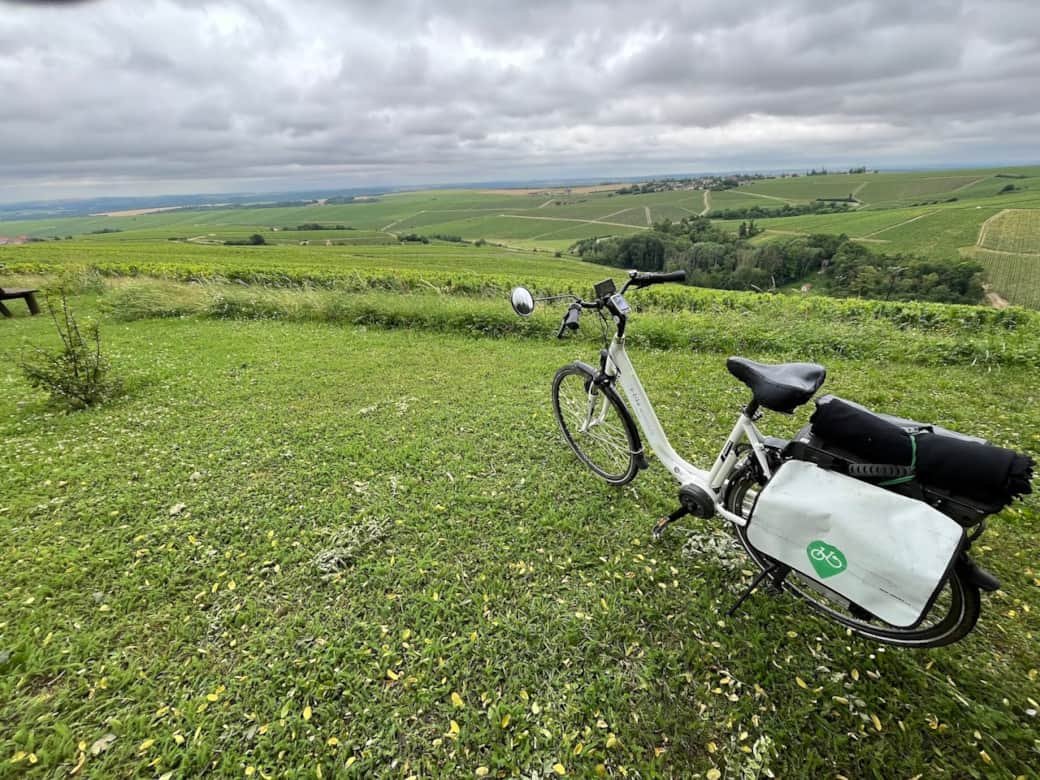
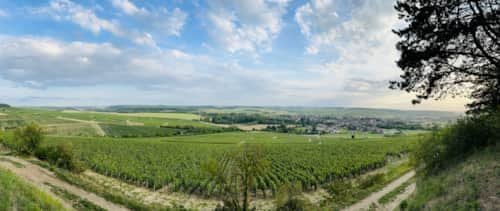
The vineyards around Chablis are best experienced on foot or by bicycle, slowly enough to notice the way the light changes across the slopes, the shift in soil from one parcel to the next. Several local companies offer bike rentals and guided routes through the countryside, with stops at estates along the way.
From Maisons Vaudésir, you can step out the door and be among the vines within minutes. The walks here are not dramatic in the Alpine sense, but they are beautiful in a quieter, more intimate way, the kind of beauty that rewards attention.
A stroll through the town
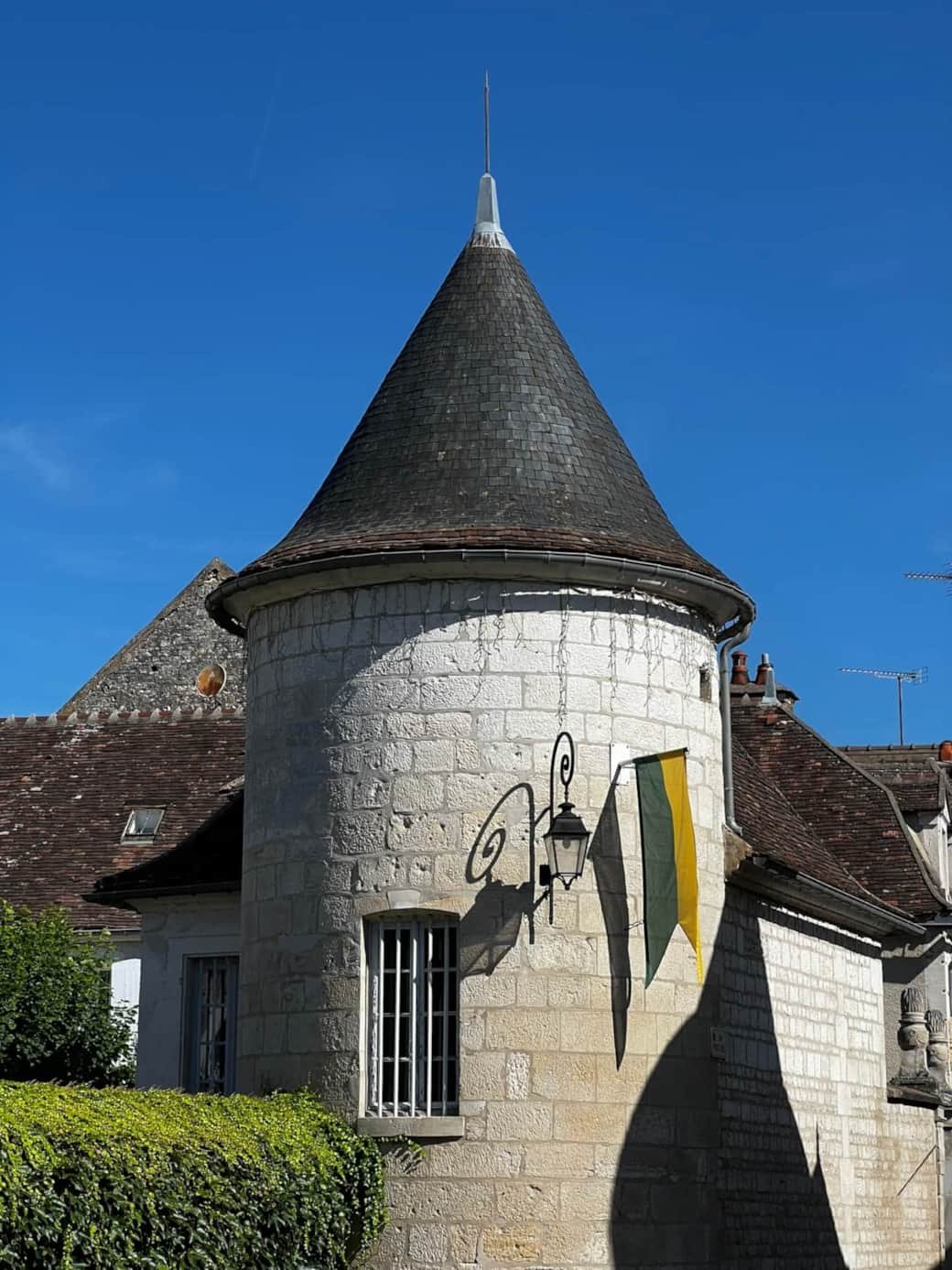
Chablis is small enough to know in an afternoon, yet rich enough to keep revealing itself over several days. The easiest way to discover the historic centre is to follow the route marked on the ground, a diamond shape with a bunch of grapes, which leads you past the town's principal landmarks.
At the entrance to the old centre, two towers mark the Porte Noël, built on the remains of medieval fortifications. The current towers date from the eighteenth century. Beyond them, narrow streets lead to the Collégiale Saint-Martin, a Romanesque church of quiet grandeur, and the Obédiencerie, a former monastery where monks once made wine and which today belongs to Domaine Laroche. You can taste their wines there, surrounded by centuries of history.
A vineyard picnic
One of the simplest and most satisfying things to do in Chablis is to assemble a picnic from the local merchants, good bread, a round of cheese, a bag of gougères, a bottle of something cold and mineral, and carry it to one of the viewpoints overlooking the vineyards. There are several, each offering a slightly different perspective on the town and the surrounding hills.
The Sunday market is an excellent place to start gathering provisions, though the bakeries and fromageries in the centre are open throughout the week.
A day in Auxerre
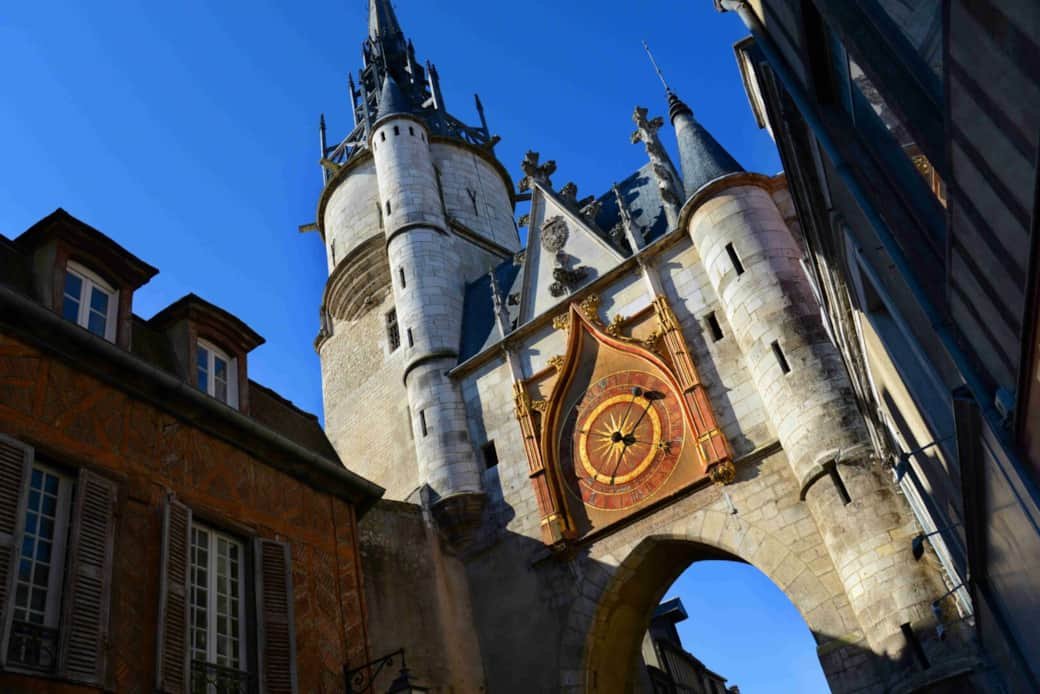
Twenty minutes by car, Auxerre is a town of real substance, the kind of place where you could happily lose a morning wandering the medieval streets and half-timbered houses along the Yonne river. The Cathédrale Saint-Étienne is magnificent, its Gothic architecture best appreciated from the far bank, where the whole skyline arranges itself into something close to a painting.
Noyers-sur-Serein
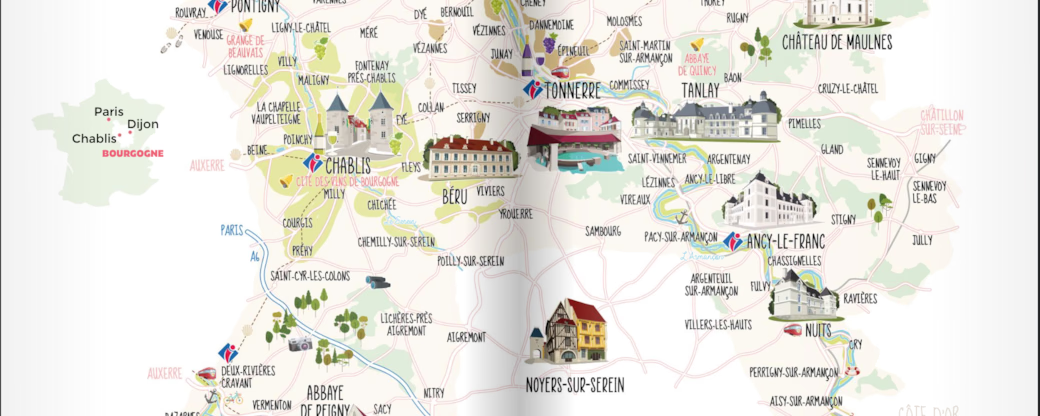
Less than thirty minutes from Chablis, Noyers-sur-Serein is one of those villages that makes you reach for your camera before you have even parked the car. Classified among the most beautiful villages in France, it has kept its medieval character almost entirely intact, the old city walls, six historic gates, and the ruins of an ancient castle just beyond the centre.
Wander the narrow streets, browse the artisan shops, visit the curious knife museum, and settle in at one of the village restaurants for lunch. There is no rush. There never is, in Noyers.
The vineyards of Irancy
A short drive, or a lovely cycle, south from Chablis brings you to Irancy, where the wine turns red. This is Pinot Noir country, and the village is set in a natural amphitheatre of vines that is particularly striking in spring, when the cherry trees are in bloom. Stop at the local cellars for a tasting and you will understand why this appellation, though less famous than its neighbours to the south, inspires such devotion.
Tonnerre
Twenty minutes east, Tonnerre is a town of unexpected treasures. The Fosse Dionne: a natural spring of mysterious depth and startling turquoise colour, has fascinated visitors for centuries. Nearby, the Hôtel-Dieu, a medieval hospital founded in 1293, is one of the oldest in France and remarkably well preserved.
Vézelay and its basilica
Perched on a hilltop with views that seem to stretch across half of Burgundy, Vézelay is one of those places that justifies the journey on its own. The Basilique Sainte-Marie-Madeleine, a UNESCO World Heritage Site and historic starting point of the Camino de Santiago, is a masterwork of Romanesque architecture. The town that surrounds it, steep streets, stone houses, a handful of excellent restaurants, is equally worth your time.
The Cité des Vins de Chablis
For those who want to understand the wines of this region more deeply, the Cité des Vins de Chablis offers a modern, interactive journey through the history, terroir, and winemaking traditions of Burgundy. Guided tastings help you navigate the appellations with confidence, whether you are just beginning to explore Chablis or have been drinking it for years.
The table
After a day of exploring, the restaurants of Chablis are ready for you. Au Fil du Zinc is a favourite, refined but unpretentious, with locally sourced ingredients and a wine list that reads like a love letter to the region. The Hostellerie des Clos offers a more formal experience, with menus that pair beautifully with the wines of the appellation.
More dining recommendations can be found in our gastronomy guide.